
Custom Patio and Outdoor Furniture in Jacksonville, FL

Your last outdoor dining set made it two summers. The joints loosened, the screws left rust streaks down the legs, and the finish went chalky on the west side. Custom patio furniture in Jacksonville, FL is part of the outdoor woodworking we take on, and most of those calls start with a story like that.

Outdoor furniture here fights four things at once: salt air east of the Intracoastal, hard UV, humidity that swells and shrinks wood weekly, and mildew on anything shaded and damp. Nothing beats all four for free. You match species, joinery and fasteners to where the piece sits, and that starts with whether it lives under a roof.

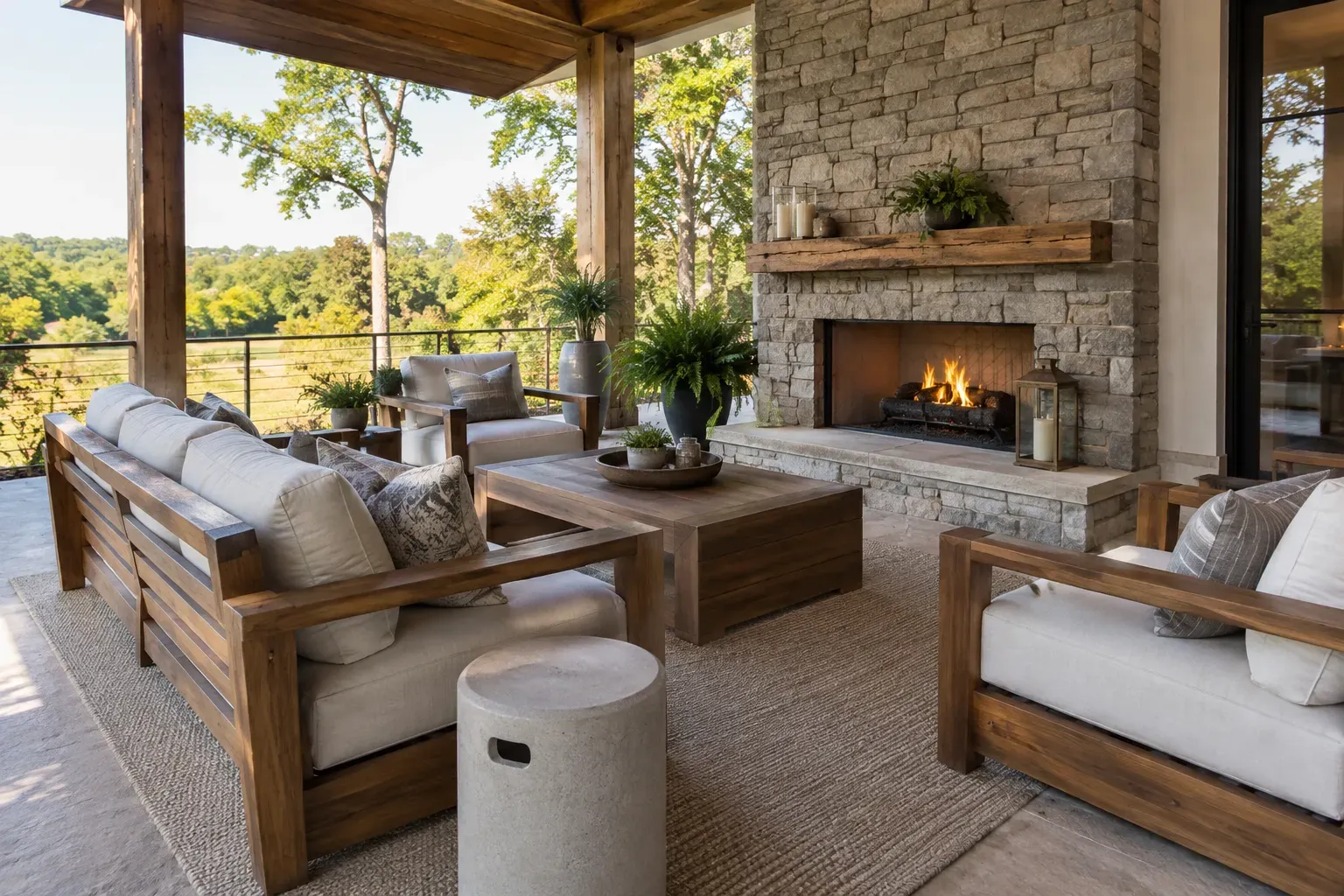
Chunky wood-framed outdoor sofa and armchairs with white cushions around a coffee table by a stone fireplace

Covered Lanai Versus Fully Exposed Patio

This is the biggest decision in the spec, and almost nobody asks about it before quoting. A screened lanai in Mandarin and an open pool deck in Atlantic Beach are two different climates.

Under a roof or screen, the piece stays out of direct rain and most sun, so more species and finishes are on the table. The tradeoff is airflow: enclosed lanais stay damp, and mildew grows underneath.

Fully exposed, a piece takes rain, standing water, full UV and, near the ocean, salt. We narrow the choice to durable species, use only stainless hardware rather than coated screws, slope horizontal surfaces, and skip film finishes.

Spec Covered lanai Fully exposed
Species range Cypress, white oak, cedar, teak, painted pine Teak, ipe, cypress
Finish Oil or a marine-grade film finish Penetrating oil, or let it silver
Slat gaps 1/8 to 1/4 in. for airflow 1/4 to 3/8 in. so water clears

If your patio is half covered, we spec to the exposed half.

Comparing Outdoor Wood Species for Northeast Florida

Here is the comparison the catalogs skip. Wood patio furniture built for this coast lives or dies on species, and each of these is the wrong choice somewhere.

Species Salt air UV Rot and humidity Where it is a bad choice
Teak Excellent Silvers, stays sound Excellent Tight budgets, or if you hate gray and will not oil
Ipe Excellent Fades, stays sound Excellent, very dense Anything you move daily. Heavy, needs pre-drilling
Cypress Very good, local Grays fast without oil Very good Bar tops and hard-use tables. It dents
White oak Good Grays without upkeep Good, better covered Exposed pieces near the ocean without diligent oiling
Cedar Good Silvers quickly Very good, light Dining tops and seat slats. Too soft
Painted softwood Poor once film cracks Blocks UV while intact Poor, traps water Anything exposed. Covered porches only

The short version: teak if the budget allows and the piece is exposed, ipe for tables that stay put, and cypress for value on a covered lanai.

Stainless Versus Coated Fasteners

This is the cheapest decision on the project and the one that ruins the most furniture. Coated deck screws are fine for a fence. In a chair leg near salt air, they corrode inside the joint, bleed rust down the wood, and lose their grip. Black streaks around a fastener in oak or cypress are a tannin reaction with steel.

We use 316 stainless east of the Intracoastal and 304 everywhere else, with carriage bolts and nylon-insert nuts that can be snugged up in year five. Joints are mortise and tenon with waterproof adhesive, and hardware is backup rather than the whole plan.

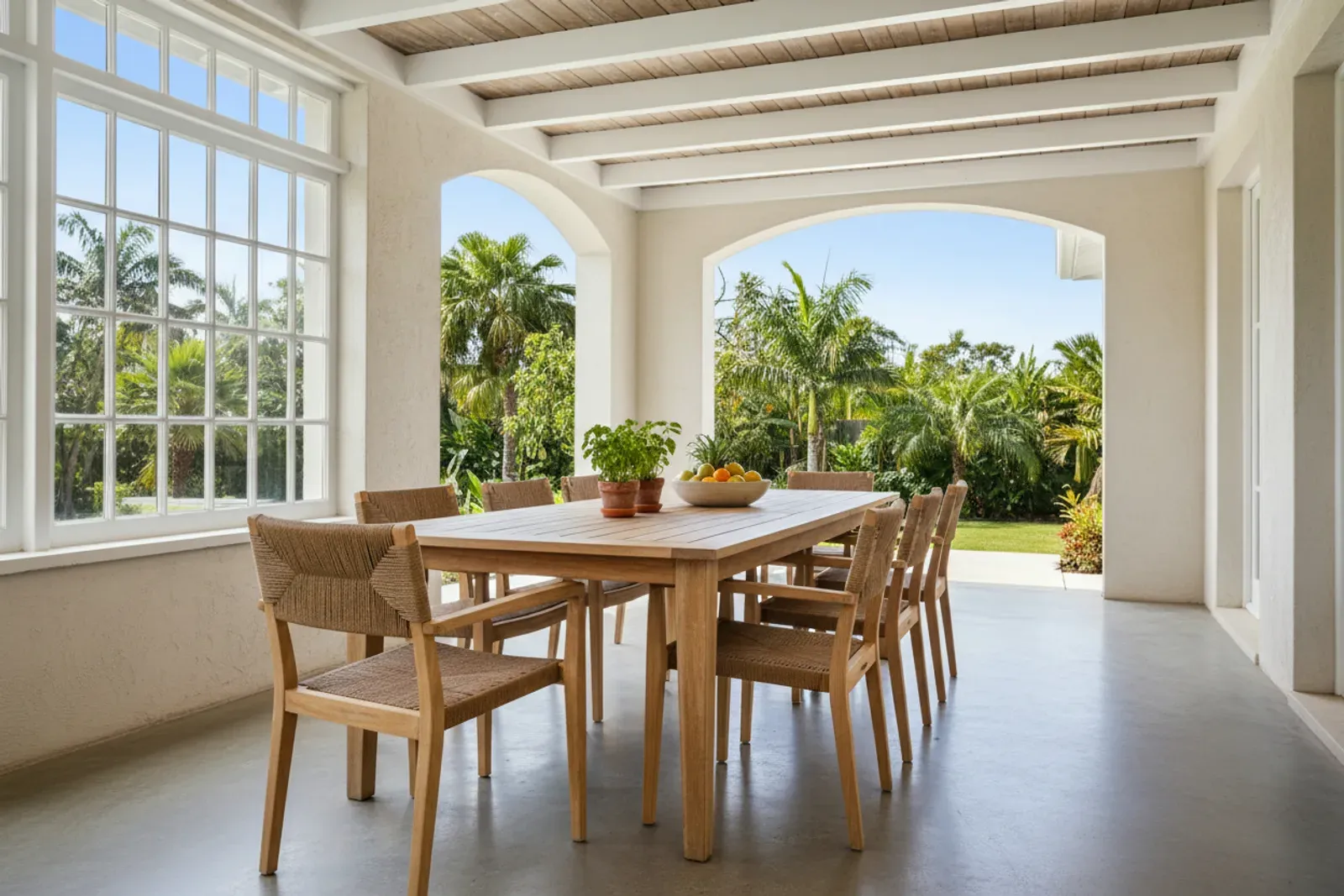
Teak outdoor dining table and chairs on a covered porch in daylight

Custom Outdoor Furniture We Build

Custom outdoor furniture covers more than a table and four chairs, and the pieces used most are the ones sized to the space: dining tables in slab, slatted or trestle form; benches, plain or with a slatted lid for cushion storage; deep-seat sofas and club chairs built around cushions you pick first; bars for pool decks and summer kitchens; lined and drained planters; porch swings hung from framing we verify can carry the load; and side tables and lanai consoles.

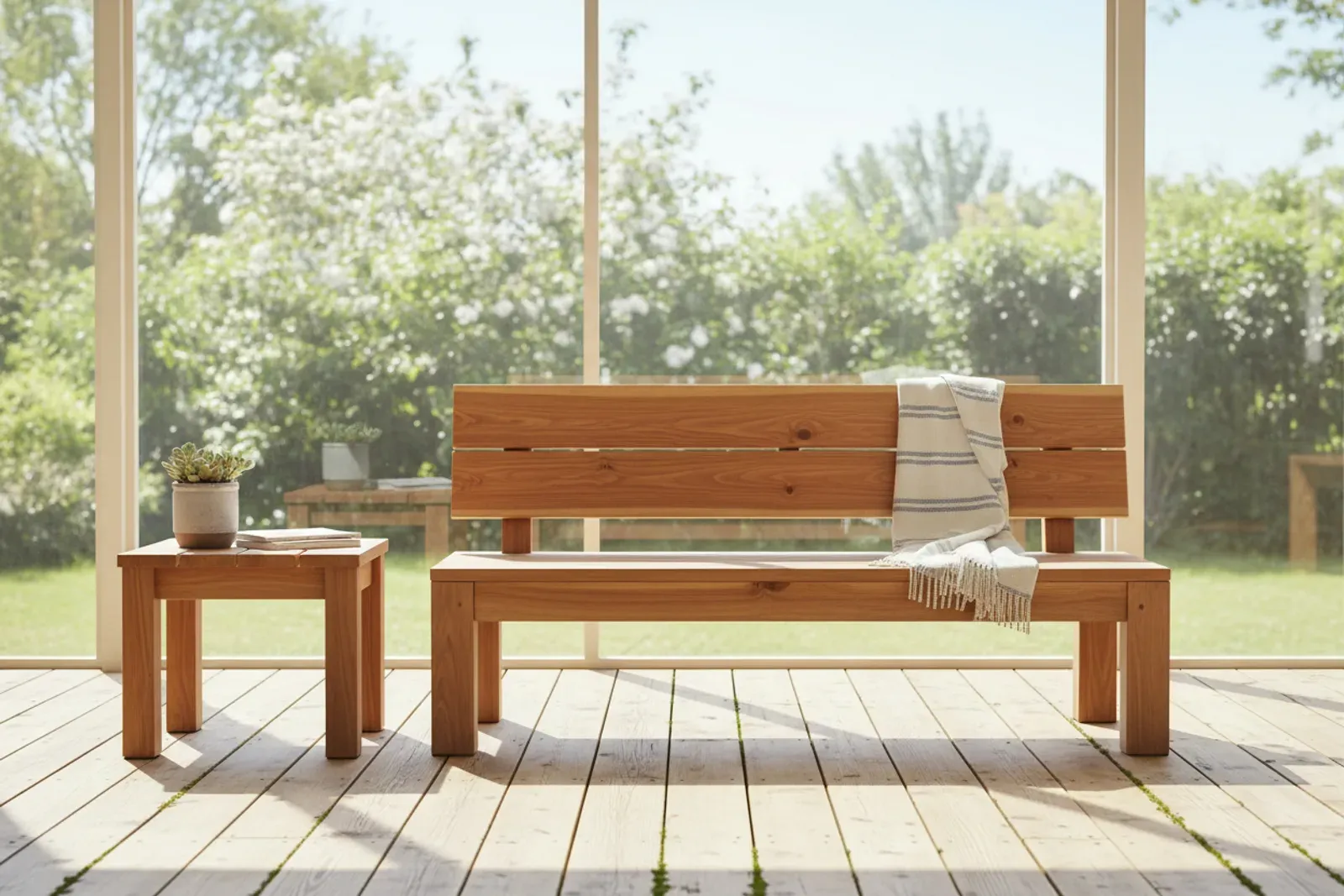
Cedar outdoor bench and side table on a deck

Sizing a Custom Outdoor Dining Table to Your Lanai

A custom outdoor dining table is our most common outdoor build, and the usual mistake is sizing it to the room instead of to the clearances. Starting points:

  • 36 inches minimum from table edge to a wall or rail, 44 to 48 where people walk behind seated guests.
  • 24 inches of table edge per person, 26 with arms.
  • Height 29 to 30 inches, with 24 to 25 inches of knee clearance under the apron.
  • Width 36 to 40 inches so two can eat across with dishes down the middle.
  • 60 inches seats six, 84 seats eight, 96 to 108 seats ten.

Run those numbers against your slab. A 12 by 16 foot lanai sounds big until you subtract 36 inches on three sides and a door swing, so in many Nocatee lanais the answer is a 72 inch table with a bench on one side.

Benches tuck fully under and save you from moving four chairs every time you hose the slab. A trestle or pedestal base keeps legs out of the corners, which is the difference between eight comfortable seats and eight people straddling a leg.

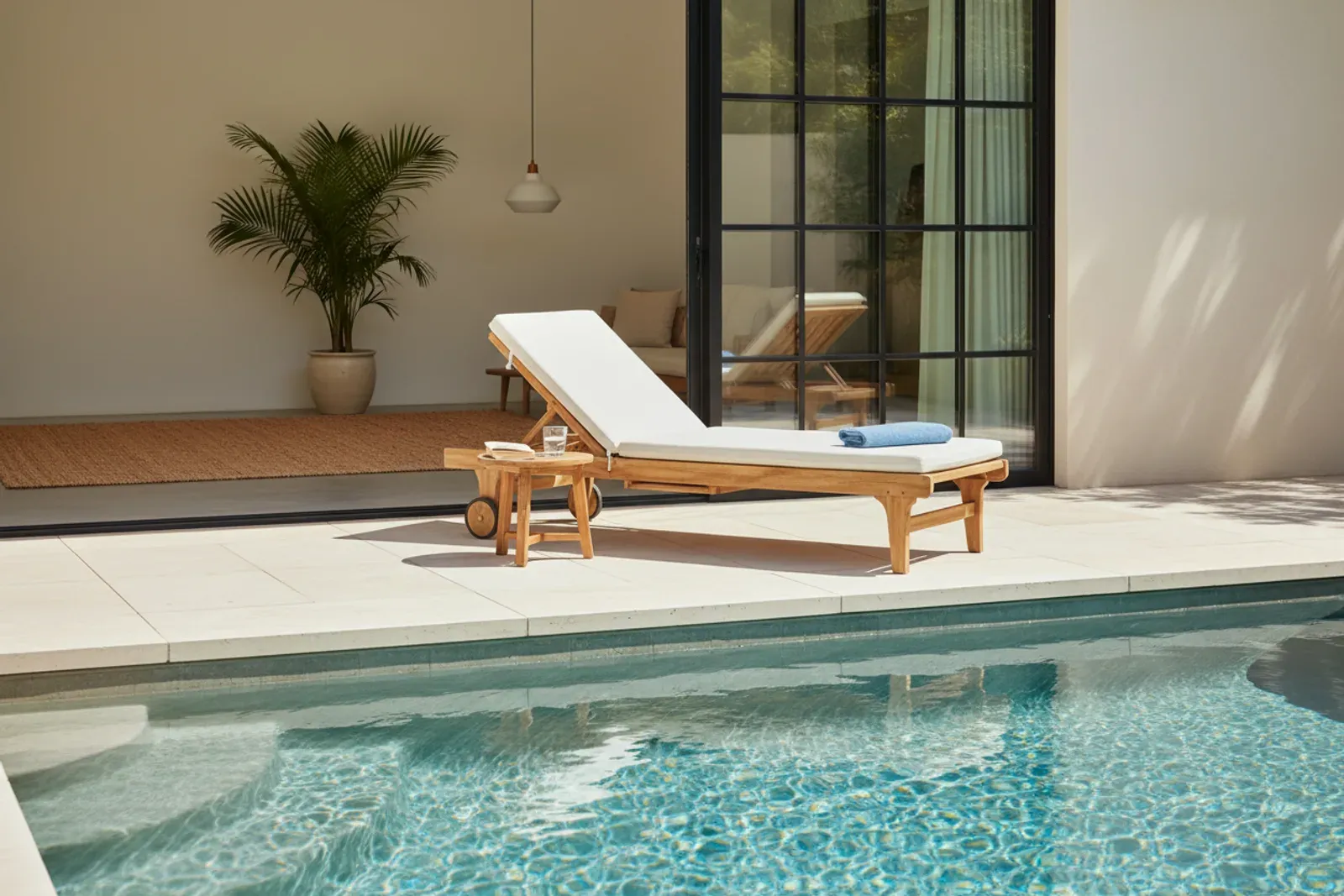
Outdoor teak lounge chair beside a pool

Custom Built Versus Catalog Sets

Search for patio furniture here and you get national retailers. That is fine for a starter set, but it is worth spelling out what custom buys you.

First, size, because your lanai is whatever size the builder poured. Second, joinery: retail furniture is bolted through end grain with knock-down hardware so it ships flat, while our joints are cut, glued and pinned. Third, species, since retail outdoor wood is largely eucalyptus or acacia.

Repair matters too: a slat on a custom bench is replaceable, while a cracked part usually ends a catalog set. A teak or ipe set with stainless hardware should last decades, where retail acacia often shows loose joints within a few summers here. What custom does not buy you is cheap or fast.

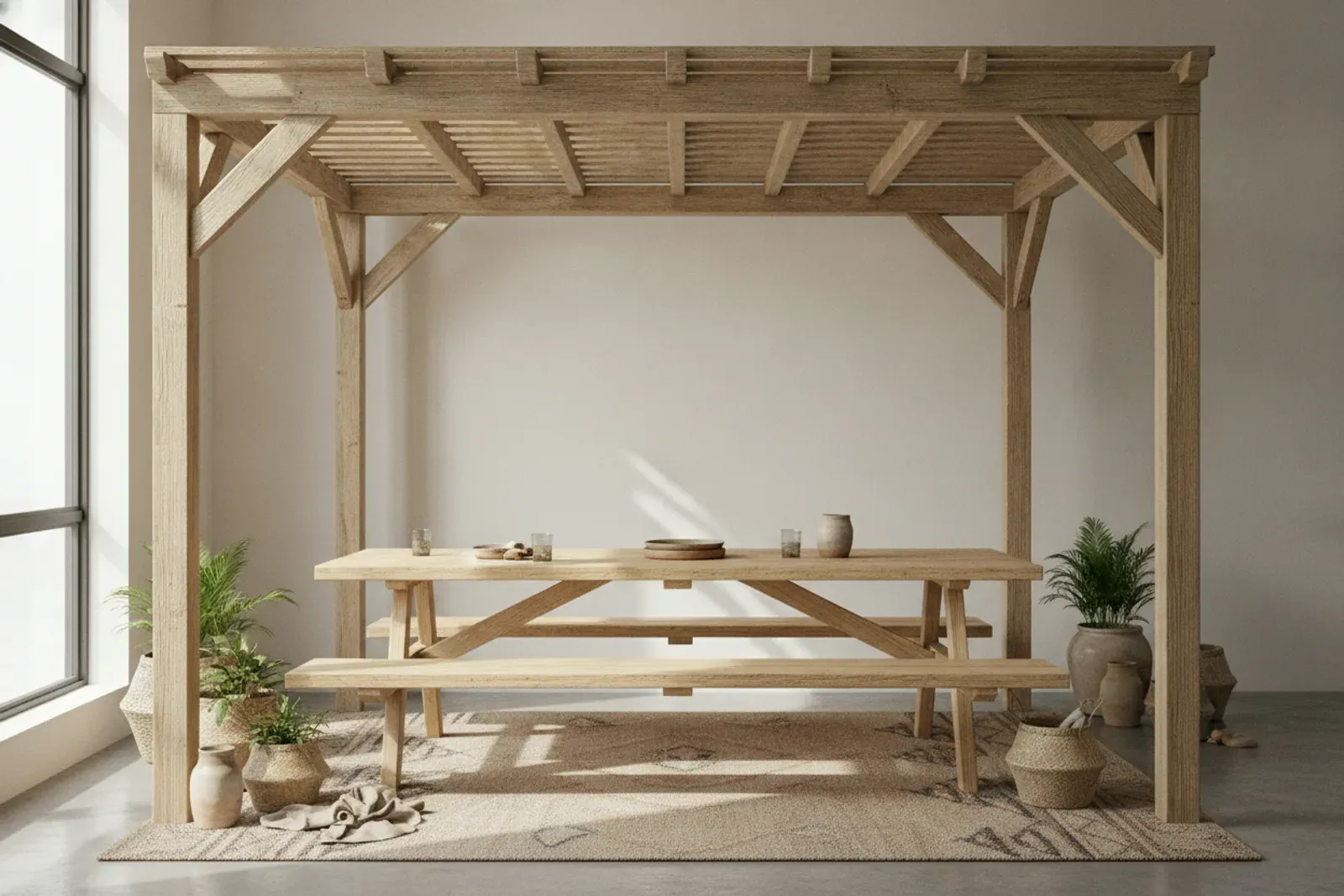
Wooden picnic style table under a pergola

Finish and Maintenance in Jacksonville

There are three honest paths, and none of them is maintenance free.

Let it silver. Teak, ipe and cedar weather to a soft gray without losing strength. Wash once or twice a year with mild soap and a soft brush. This is our recommendation for exposed teak.

Oil it. A penetrating exterior oil keeps the original color, reapplied every 6 to 12 months when exposed and every 12 to 18 months under a lanai roof. It is a wipe-on job, not a sanding job, which is why we prefer oil outdoors.

Film finish, covered only. Marine-grade spar varnish looks beautiful on a covered porch and needs a fresh coat roughly once a year. In full sun and rain, it crazes and peels within a couple of years.

A simple calendar: wash in spring, snug the hardware, re-oil if the color has faded, and clear standing water after a storm. Skip pressure washing, which erodes soft grain.

Working With a Local Outdoor Furniture Builder: Our Process

Our work as your outdoor furniture builder starts with standing on the patio. We measure the slab, note the roof line and screen enclosure, watch the sun, and ask how close the water is.

You get a drawing with dimensions, a species recommendation with the tradeoffs spelled out, the hardware called out, and a written quote. If cushions are in the plan, we get their dimensions before we build frames.

Shop time runs four to eight weeks depending on piece count and species availability, and a deposit of about half holds the slot. We deliver finished, level everything, and leave you the oil and the maintenance schedule in writing.

What Handmade Patio Furniture Costs

Handmade patio furniture is priced by species and size. Teak and ipe carry a real premium over cypress and cedar.

Piece Cypress or cedar Teak or ipe
Dining table, 72 in. $2,400 to $4,200 $4,500 to $8,500
Dining table, 96 in. $3,400 to $5,800 $6,000 to $12,000
Dining bench, 60 in. $700 to $1,400 $1,300 to $2,600
Deep seat sofa, 3 seat $2,600 to $4,800 $4,500 to $9,000
Outdoor bar, 72 in. $2,800 to $5,500 $5,000 to $9,500

A lounge chair starts near $900, a hung swing near $1,400, and planters around $500. Cushions run $200 to $600 per seat in solution-dyed acrylic, the only fabric worth buying in this sun. What moves the price: species, size, a slatted versus a solid top, and hand shaping. These are typical ranges, and an exact number requires seeing the patio.

Outdoor Pieces Specified for Salt, Sun and Storms

316 vs 304

Hardware Graded by Distance From the Water

Coated deck screws rust inside a joint, leave dark streaks down the legs and eventually lose their hold. Pieces for homes east of the Intracoastal get 316 stainless, while 304 goes everywhere else. Carriage bolts with nylon insert nuts let you tighten things up years later, and every joint is a glued mortise and tenon, so the metal serves as backup instead of carrying the whole load on its own.

Roof or Sky

Specs Based on Whether the Piece Gets Rain

A screened Mandarin lanai and an open pool deck at Atlantic Beach are different climates, and we ask which one you have before quoting. Covered spots allow a wider list of woods and finishes but need slat gaps for airflow against mildew. Fully exposed pieces are limited to teak, ipe or cypress, with sloped surfaces, wider gaps so water drains and no film finish. A patio that is only half covered gets the exposed specification.

Oil or Silver

A Care Plan Handed Over in Writing

No outdoor wood gets by without some attention, so we are upfront about the options. Teak, ipe and cedar can be left to weather to gray without losing strength, needing only a gentle wash once or twice a year. If you prefer the original color, a wipe on exterior oil every 6 to 18 months keeps it, depending on exposure. At delivery we level each piece and leave the oil along with a written schedule.

What Jacksonville Homeowners Say

4.8from 51 Google reviews

  • Absolutely recommend! 5 Star experience all around. Pricing was extremely reasonable and fair and the results of the work was spectacular. I had a window frame and siding that needed to be replaced due to water damage. The end result was nothing short of excellent. I will be definitely be using them again going forward and will be letting others know to use them as well.

    Gregory Brown · a year ago on Google

  • If I could give Klein Carpentry 10 Stars I would. Ray and Nathan are First Class Carpenters and throughout the whole process their attention to detail was beyond our expectations. We had Shiplap installed in our Cafe/Dining Room and Board&Batten throughout the Foyer. Through the start of installation the communication, cleanliness and putting up a plastic wall to exhaust the dust outside was a Plus because going through renovations can be stressful but they made it perfect. We are so impressed that they are coming back to do built-ins on each side of the fireplace. ⭐️⭐️Update Second Review⭐️⭐️ Ray and Nathan has exceeded our expectations again. Just Wow!!! They designed our 10 ft Built Ins here in Marshes of Maderia by Master Craft Homes. We absolutely love the Reeded Door and Drawer Panel design with Lights looks so Sophisticated and Timeless . Now our New Home looks complete ❤️

    Stacy Johnson · a year ago on Google

  • We recently used Klein Carpentry to aid in the renovation of our home. Ray and his team installed new baseboards, wainscotting, window/door trim and crown molding to bring a major update to what was a builder grade interior. From the bidding to the final nail took about two months but the results were worth the wait. During the entire process, Ray was polite and passionate about his work while keeping the working area tidy at all times. I would highly recommend using Kline for any of your carpentry needs, you won't be disappointed!

    Glenn Seagers · 2 years ago on Google

Reviews from Google

Frequently Asked Questions

What is the best wood for outdoor furniture in Jacksonville?

Teak is the benchmark for exposed pieces, and ipe is the best value in that tier if the piece stays put. Cypress is the local choice for a covered lanai. Cedar and painted softwood belong under a roof.

How often do I have to oil outdoor furniture here?

Every 6 to 12 months on a fully exposed piece and every 12 to 18 months under a lanai roof. It is a wipe-on job once the surface is clean and dry, or you can pick teak and let it silver.

Do I need a permit for custom patio furniture?

No. Freestanding furniture is not a permitted structure. A built-in bar or a hung swing means attaching to the house, which we handle by fastening into real structure. An HOA in Nocatee or Ponte Vedra may still have opinions about it.

Will custom wood patio furniture survive salt air at the beach?

Yes, if it is built for it: teak or ipe, 316 stainless fasteners, waterproof adhesive, and joinery that does not rely on screws. The fasteners matter as much as the wood, since corroding hardware wrecks good lumber from the inside.

Can you build furniture for a screened lanai that matches what is inside?

Often, yes. Under a roof and screen we can use species and finishes that would not last outdoors, so matching an interior white oak is realistic. We still detail for airflow.

Related Woodworking and Carpentry Services

Ready to Build Something That Lasts Out There?

Tell us where the patio is, whether it is covered, and how close the water is, and we will tell you what to build it from. Call Klein Carpentry at (904) 759-4988 and we will measure the space here in Jacksonville.

Get A Free Quote Today