
Integrated LED Ceiling Lighting and Millwork in Jacksonville, FL

You saw a ceiling glowing from the edges with no fixture in sight, and you want that. Getting it right takes LED ceiling lighting and millwork designed together, and in Jacksonville, FL it is part of the custom ceiling carpentry we build. The light is easy; the woodwork that hides the strip and keeps every diode off the drywall is not.

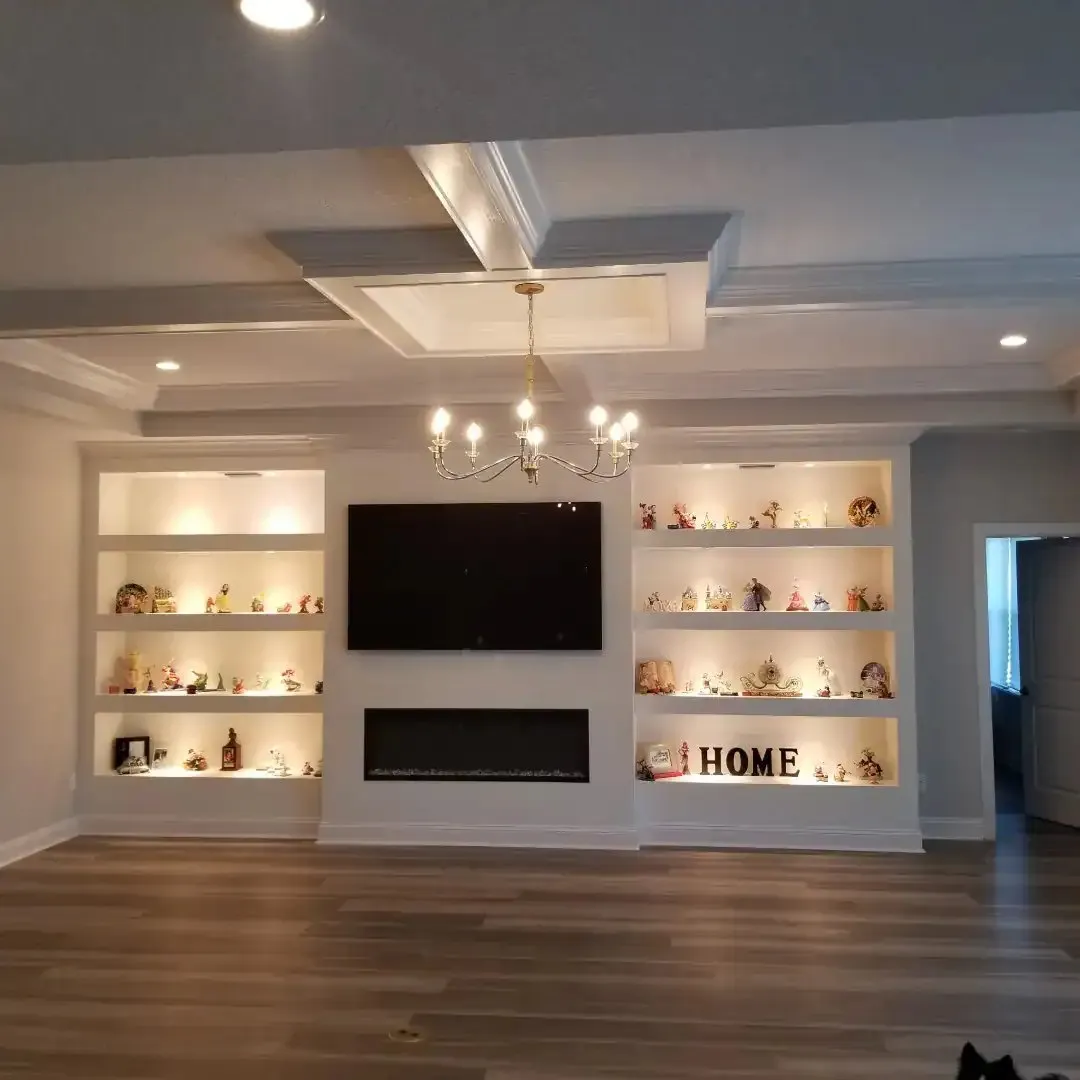
Built-in niches with integrated LED lighting around a TV and electric fireplace

Integrated LED Lighting: What It Is and What It Is Not

Integrated LED lighting means the source is part of the structure, not a fixture stuck to it. Tape in an aluminum extrusion with a frosted lens, routed into a shelf, is integrated. Rope light on a crown is not.

The difference: even light instead of dots, an invisible source, and a strip you can replace. We build it into coves and reveals at the ceiling, under shelves, at toe kicks, inside beams and behind slat panels.

Cove Lighting Millwork: Built, Not Bought

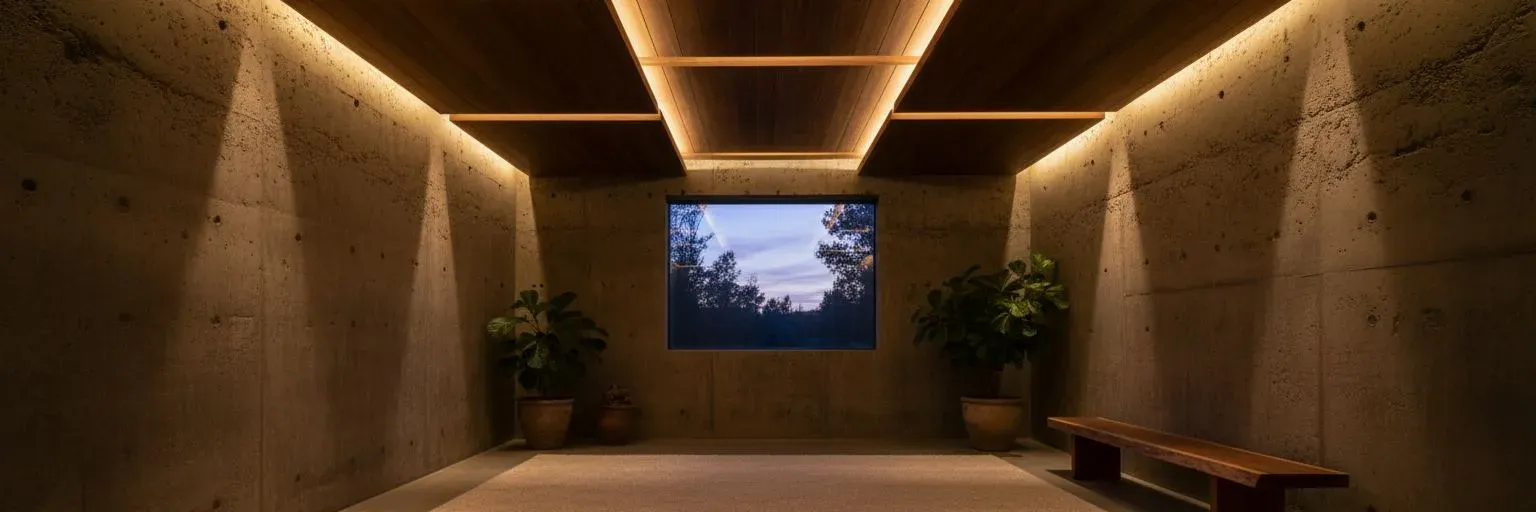
Real cove lighting millwork is an assembly, not a product. We build a ledge around the room perimeter, set back from the wall, with a returned face tall enough to hide the strip at standing height. Proportions do the work: too shallow and you see diodes, too tall a lip and light gets trapped. The strip sits flat, aimed up, with 4 to 8 inches of clearance.

Approach How it reads Cost
Rope light on crown Dotted, source visible Lowest
Surface channel on trim Even, channel visible Low
Built cove or reveal Invisible source, even wash Moderate to high
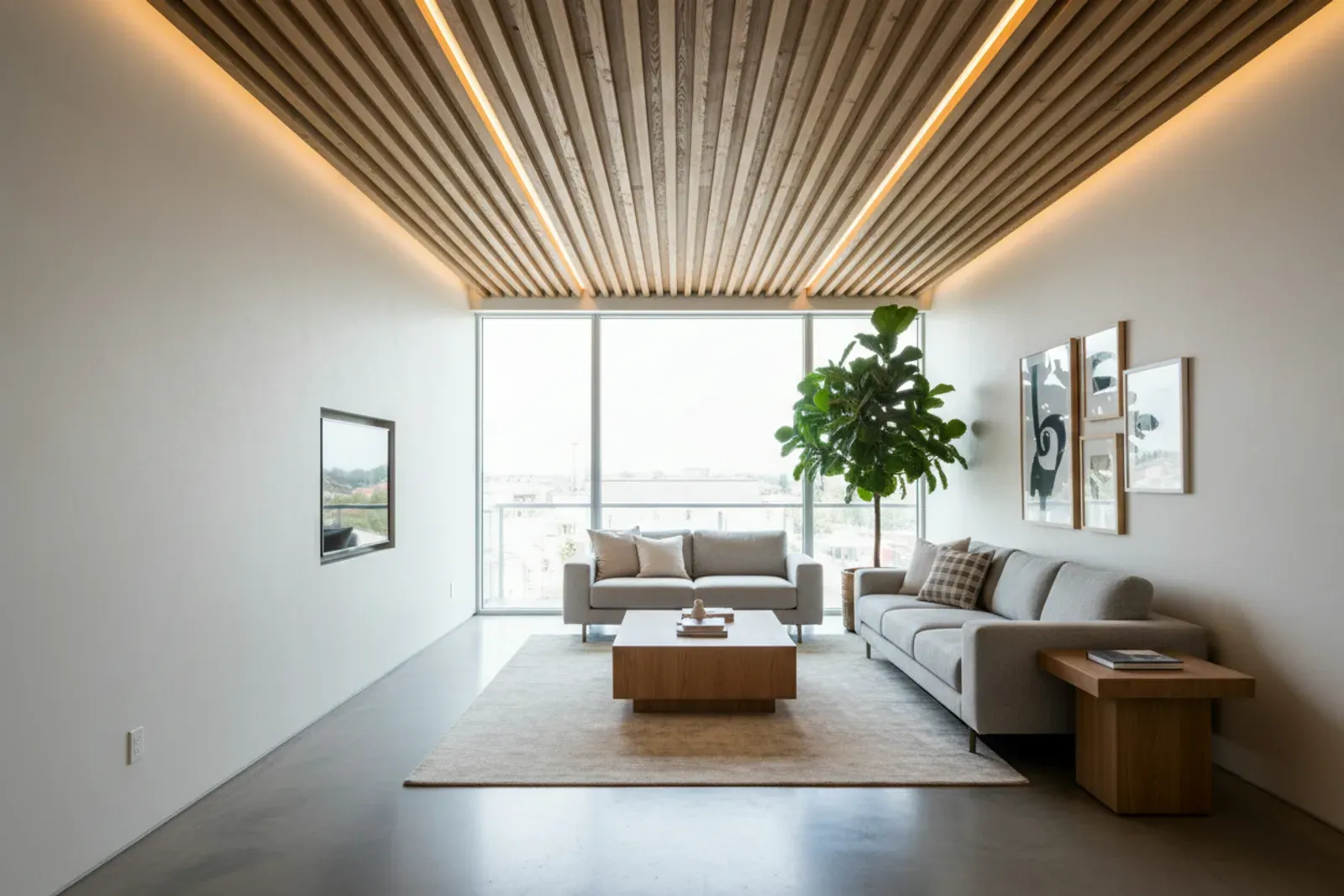
Room where LED strips glow from reveals in wooden ceiling millwork

Planning LED Cove Lighting in a New Build Ceiling

The best time to plan LED cove lighting in a ceiling is before drywall. In new construction around Nocatee and St. Johns, we coordinate with the framer and electrician at rough-in so the pocket, blocking and wire runs land right.

A tray or coffered ceiling can then carry a reveal in the perimeter step, and decorative ceiling beams can be hollow boxes with the strip in the top edge. In an existing home the cove becomes an applied assembly.

Popcorn Ceilings First

Many Jacksonville homes from the 1970s and 1980s still have textured ceilings. Cove light rakes the surface and shows every bump, so we scrape and skim it first.

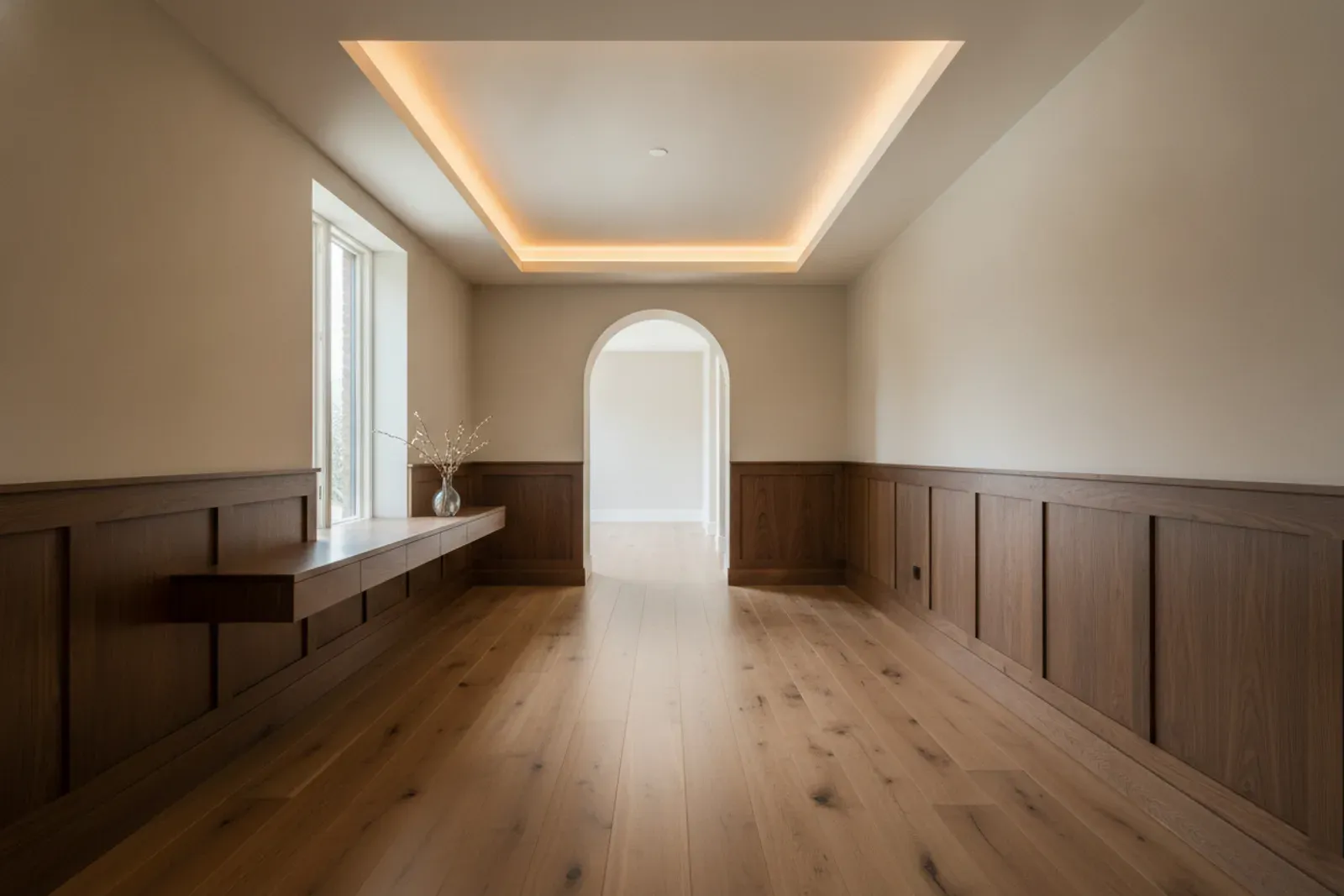
Hallway with a lit cove ceiling detail in painted millwork

Built-In LED Lighting for Shelves and Cabinets

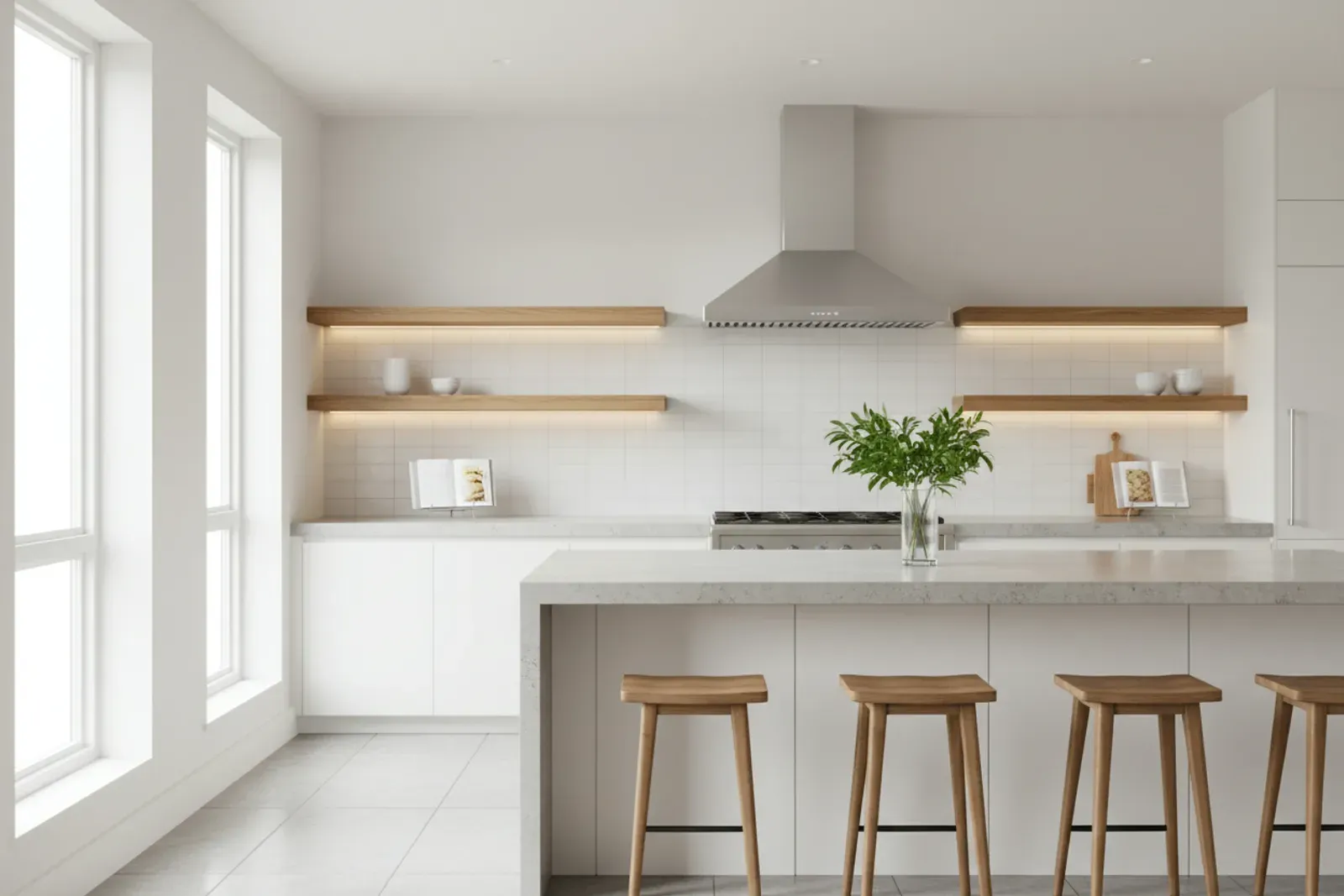
Built-in LED lighting is not only for ceilings. We rout a channel into the underside of each shelf so the extrusion sits flush, then run wire through the gable to the driver. On a home bar the strip hides behind a front lip so bottles light without glare, and on floating shelves it sits in the bottom.

Kitchen with LED lighting under floating wood shelving

LED Strip Lighting in Trim: Florida Details

Two Florida conditions change how we detail LED strip lighting in trim.

Drivers make heat and eventually fail, so burying one in a sealed soffit is a mistake. We put them somewhere reachable, such as a cabinet interior or behind a removable panel, so one swaps out without cutting drywall.

Then corrosion. Near the Beaches, salt air gets into everything and open sliders pull humid air inside, so we use sealed connectors, not bare solder joints.

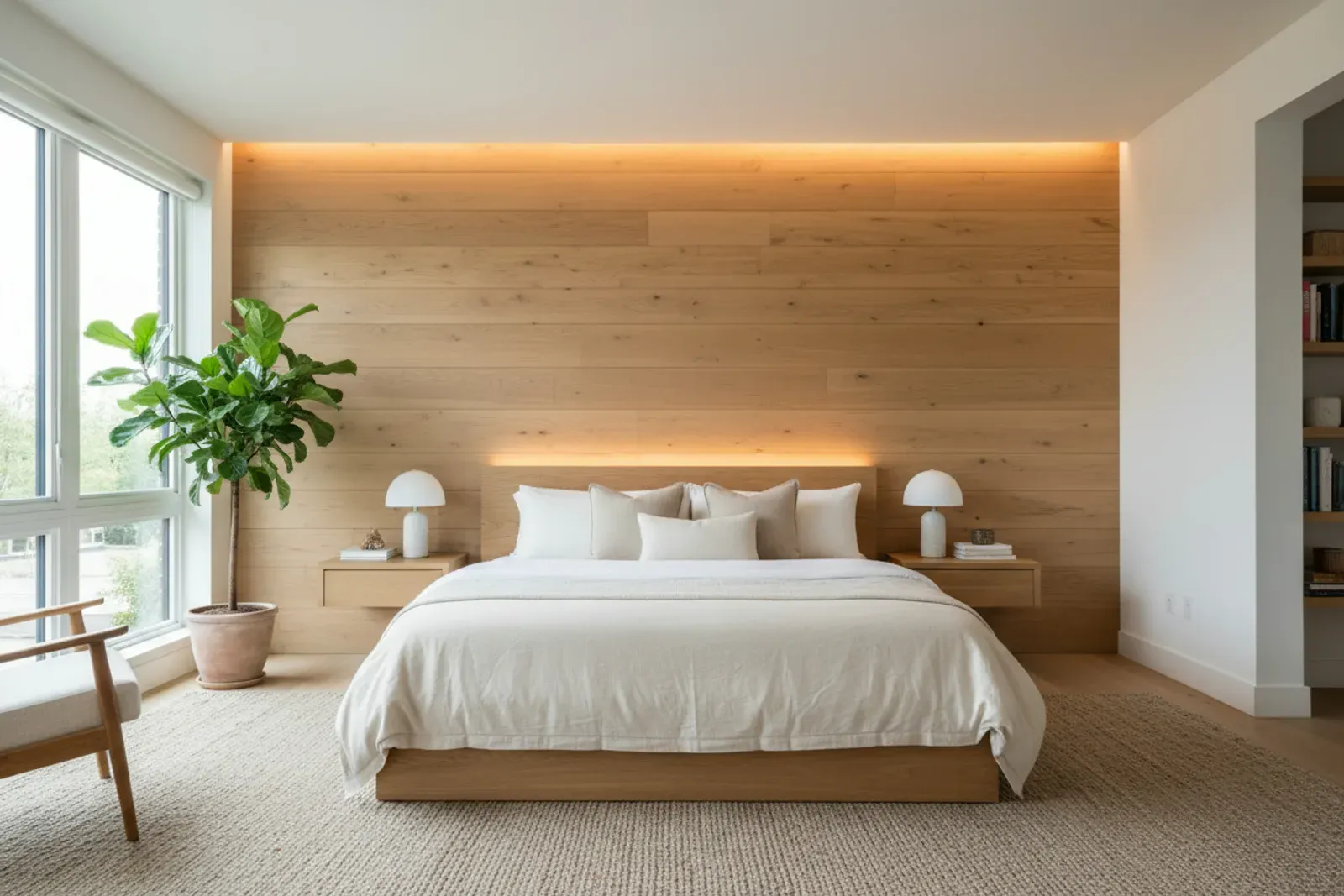
Bedroom with a backlit wood panelled headboard wall

Carpenter, Electrician, or Both

Low-voltage tape past the driver is carpentry work. The line-voltage feed, junction box, switch and anything tied to your panel is electrical work for a licensed electrician.

The scopes meet at the driver. We build the cove, install the tape and terminate the low-voltage side; the electrician brings power to a box we locate and ties in the dimmer.

Our Process From First Call to Finished Install

We start with a site visit to check ceiling height, condition and where you sit, since sight lines set cove depth. Then comes a layout showing the cove section, strip position, driver and switch.

Build follows: framing or applied cove, blocking, then finish millwork. Depending on the project, some pieces are built in our shop and brought in finished, and others are built on site in your home. Tape goes in after paint, the electrician ties in power, and we test at night.

LED Ceiling Lighting and Millwork Costs in Jacksonville

Scope Typical range
Under-shelf or toe-kick run $250 to $600
Applied cove, one wall $45 to $80 per foot
Room perimeter cove, retrofit $2,800 to $6,500
Reveal in tray or coffer $4,500 to $12,000

Ceiling condition, new build versus retrofit, and how much perimeter is involved move the price. Popcorn removal adds roughly $2.50 to $5.00 per square foot, and electrical is separate. These are typical Northeast Florida ranges; an exact number takes seeing the room.

Why Klein Carpentry Builds the Cove, Not Just the Light

4 to 8 Inches

Coves Proportioned to Hide Every Diode

A glowing ceiling edge only works when the woodwork is sized correctly. We build a perimeter ledge set back from the wall, with a returned face tall enough to hide the strip when you are standing. Make it too shallow and the diodes show; make the lip too tall and the light gets trapped. The tape lies flat, aimed upward, with 4 to 8 inches of clearance, and we check sight lines from where you actually sit.

Reachable

Drivers You Can Swap Without Demolition

Drivers give off heat and wear out, usually well before the tape does, so sealing one inside a closed soffit sets you up for torn drywall later. We place them in a cabinet interior or behind a removable panel, and the strip itself sits in an aluminum extrusion under a frosted lens so it can be replaced. Near the coast, where salt and humid air drift in through open sliders, every connection gets a sealed connector rather than bare solder.

Low Voltage

A Clean Handoff to Your Electrician

The two trades meet at the driver. Our side covers the cove or reveal, the tape, and the low voltage connections. A licensed electrician runs line voltage to a box we locate, then wires the switch and dimmer. In new construction we coordinate with the framer and electrician at rough in, so pockets, blocking and wire runs land where the millwork needs them. Tape goes in after paint, and we test everything after dark.

What Jacksonville Homeowners Say

4.8from 51 Google reviews

  • I reached out to get an estimate on building a wet bar to put in the mudroom of our home. Ray sent me a work up and it looked great, so we moved forward. Their craftsmanship is flawless, and they truly went above and beyond to ensure we were happy with the work. Would highly recommend if you’re looking at home projects

    Josh G · a year ago on Google

  • Absolutely recommend! 5 Star experience all around. Pricing was extremely reasonable and fair and the results of the work was spectacular. I had a window frame and siding that needed to be replaced due to water damage. The end result was nothing short of excellent. I will be definitely be using them again going forward and will be letting others know to use them as well.

    Gregory Brown · a year ago on Google

  • If I could give Klein Carpentry 10 Stars I would. Ray and Nathan are First Class Carpenters and throughout the whole process their attention to detail was beyond our expectations. We had Shiplap installed in our Cafe/Dining Room and Board&Batten throughout the Foyer. Through the start of installation the communication, cleanliness and putting up a plastic wall to exhaust the dust outside was a Plus because going through renovations can be stressful but they made it perfect. We are so impressed that they are coming back to do built-ins on each side of the fireplace. ⭐️⭐️Update Second Review⭐️⭐️ Ray and Nathan has exceeded our expectations again. Just Wow!!! They designed our 10 ft Built Ins here in Marshes of Maderia by Master Craft Homes. We absolutely love the Reeded Door and Drawer Panel design with Lights looks so Sophisticated and Timeless . Now our New Home looks complete ❤️

    Stacy Johnson · a year ago on Google

Reviews from Google

Frequently Asked Questions

Can you add cove lighting to a popcorn ceiling?

Yes, but the ceiling should be scraped and skimmed first, since cove light shows texture that overhead light hides. We handle removal and patching in the same job.

Will LED strips hold up in Florida humidity and salt air?

They do when specified and terminated properly. We use sealed connectors, not bare solder joints, and keep drivers accessible, with extra care at the coast.

What color temperature should I pick?

Use 2700K for living rooms and coves, or 3000K in kitchens and bars. Avoid 4000K and above indoors, since it turns wood gray.

Do I need an electrician too?

Yes, for the line-voltage side. We build the millwork and handle low voltage, and a licensed electrician brings power and wires the dimmer.

Can the strips be replaced later?

Yes. The driver usually fails before the tape does, and both pull out without cutting drywall.

Related Carpentry Services

Talk Through Your Ceiling

If you want a glow with no visible fixture, call Klein Carpentry at (904) 759-4988 and tell us about the room. We will look at ceiling height and sight lines and say what is realistic in Jacksonville.

Get A Free Quote Today